Difference Between Goldring Gr3 Turntable and Final Audio Dx3000Cl Explained
When shopping for audio gear, comparisons often occur between like-for-like products: one turntable versus another, headphone versus headphone. Less common—but equally useful—is a cross-category comparison that helps buyers decide which investment matches their listening habits. This article explains the difference between the Goldring Gr3 turntable and the Final Audio Dx3000Cl, two products that sit at different points in the home-audio ecosystem. One is a source component for vinyl playback; the other is a personal listening transducer. Understanding how each impacts sound, setup, cost of ownership, and real-world use will help prospective buyers make an informed choice based on lifestyle and listening priorities.
Introduction: Why compare a turntable to headphones?
At first glance, comparing a turntable and a pair of headphones may seem odd. They are different categories with different roles: a turntable is a source that reproduces vinyl, typically feeding a phono preamp and loudspeakers; headphones convert electrical signals into sound at the ear. Yet people often choose between investing in an improved shared listening setup (vinyl + speakers) or improving their personal listening experience (high-end headphones + amp). This article dissects the practical differences between the Goldring Gr3 and the Final Audio Dx3000Cl to help buyers decide which path better aligns with their needs.
Product analysis: Goldring Gr3 Turntable
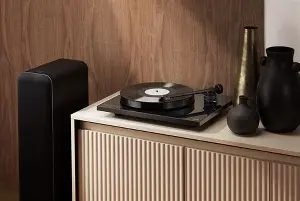
The Goldring Gr3 turntable is presented as a platform for vinyl enthusiasts who want dependable, musical playback without excessive complexity. In broad terms, the Gr3 represents what buyers typically care about in a turntable: build quality, isolation, tonearm/cartridge compatibility, and ease of setup. These are the attributes that determine how faithfully the turntable extracts information from a record and how resilient it is to environmental vibration.
Design and build: The Gr3 is generally built with a focus on solidity and vibration control. Buyers often appreciate a denser platter, a stable motor mounting, and a tonearm geometry that supports accurate tracking. Those features minimize rumble and improve the signal delivered to the cartridge.
Sound and musicality: The fundamental strength of any turntable is how it allows the cartridge to read the grooves. A well-executed design like the Gr3 typically delivers a warm, coherent presentation with a tactile midrange and good rhythmic drive—qualities prized by vinyl lovers. How “good” it sounds depends strongly on cartridge choice, phono stage, and the downstream amplification and speakers.
Setup and integration: Turntables require more system-level considerations than most headphones. Users must think about cartridge mounting and alignment, phono preamplification (moving-magnet vs moving-coil compatibility), grounding, platter speed accuracy, anti-skate adjustments, and mechanical isolation. While some buyers enjoy this hands-on aspect, others see it as a barrier.

Maintenance and longevity: A turntable is a mechanical device. Needles wear, belts (if belt-drive) can stretch, and tonearm bearings may need occasional attention. However, with proper care a good turntable provides decades of service and is highly serviceable; cartridges are replaceable, and many upgrades are possible over time.
Pros & Cons — Goldring Gr3 Turntable
- Pros:
- Provides authentic, tactile vinyl playback and ritualistic listening experience
- Upgradeable via cartridges, mats, and isolation accessories
- Typically a warm and engaging sound signature favored by analog fans
- Good long-term value for those committed to vinyl
- Cons:
- Requires additional components (phono stage, amp, speakers) to complete a system
- Needs regular maintenance and careful setup for best results
- Less convenient for late-night or private listening compared with headphones
- Susceptible to room acoustics and placement when used with speakers
Product analysis: Final Audio Dx3000Cl
The Final Audio Dx3000Cl is a personal listening product aimed at listeners who prioritize resolution, isolation (if closed-back), and an intimate, focused presentation. Headphones such as this appeal to people who want critical listening, privacy, or an all-in-one solution that works with many sources (phone, DAC/amp, portable players). Buyers typically care about comfort, tonal balance, imaging, isolation, and how the headphones interact with common headphone amplifiers and portable devices.
Design and comfort: Final Audio products tend to focus on refined ergonomics and premium finish materials. The Dx3000Cl, being a closed-back model by implication, emphasizes isolation from ambient noise and often a controlled low end. Fit and clamp force are critical—long listening sessions require pads and headband designs that distribute pressure evenly.
Discover deals on Audio & Headphones — updated daily.
Shop Amazon →Sound and performance: High-quality closed-back headphones can deliver tight bass, clear mids, and a detailed treble without bleeding sound to the environment. The Dx3000Cl is typically tuned for accurate retrieval of detail with an emphasis on clarity. The perceived sound will vary depending on the source and amplification: a capable DAC/headphone amp will reveal more nuance, while low-power portable sources may not push the headphones to their full potential.
Setup and integration: Headphones are comparatively simple to set up. They require a compatible output on a source device and, depending on sensitivity and impedance, may benefit from a dedicated headphone amplifier. For desktop use, a DAC/amp combination is a common pairing; for mobile use, a quality portable amp or a high-end phone with a robust headphone output helps.
Maintenance and longevity: Headphones require far less mechanical upkeep than a turntable, though pads and cables will age. Many headphone models allow pad replacements and cable swaps, enabling long-term use without significant technical adjustments.
Pros & Cons — Final Audio Dx3000Cl
- Pros:
- Immediate, private listening with strong isolation for noisy environments
- Simpler setup—few components are required for good performance
- Excellent detail retrieval suitable for critical listening and late-night use
- Portable (relative to speakers) and flexible with many sources
- Cons:
- Less natural room-based soundstage than dedicated speaker systems
- Performance depends on the source and amplification; a high-quality DAC/amp may be necessary
- Long-term comfort varies between listeners and head shapes
- Closed-back headphones can feel less airy than open-back models
Direct comparison: key differences at a glance
| Feature | Goldring Gr3 Turntable | Final Audio Dx3000Cl |
|---|---|---|
| Product type | Analog vinyl source component | Closed-back headphones for personal listening |
| Primary use | Shared or dedicated-room listening with speakers | Private or mobile listening with head-bound transducers |
| Required system components | Phono preamp + amplifier + speakers (or integrated amp with phono) | Source (phone, DAC) and possibly headphone amplifier |
| Setup complexity | Higher—mechanical setup and alignment needed | Lower—plug-and-play, with optional amp/DAC |
| Maintenance | Periodic mechanical care (stylus, belt, calibration) | Minimal—pad and cable replacements over time |
| Listening environment sensitivity | High—room acoustics greatly affect sound | Low—headphones are relatively immune to room acoustics |
| Upgrade path | High—cartridges, phono stages, isolation accessories | Moderate—cables, pads, and amplification choices |
Real-world use cases: which product fits which listener?
Understanding typical use scenarios clarifies which product will deliver more value for a buyer.
- The vinyl enthusiast with space and patience: Someone who enjoys ritualized listening, collecting records, and sharing music with household members will appreciate the Gr3. Its strengths show in extended listening sessions with an invested playback chain and speaker setup. Turntables reward investment in upstream and downstream components and in acoustic treatment of the room.
- The commuter or late-night listener: For those who want high resolution without disturbing others—commuters, apartment dwellers, or late-night workers—closed-back headphones like the Dx3000Cl make more sense. They deliver an immersive experience without the need for room treatment or a full stereo system.
- The critical listener on a budget of space and time: If space is limited or the buyer prefers minimal fuss, investing in high-quality headphones provides immediate sonic improvement for a single purchase and is easy to pair with modern digital sources.
- The social listener and entertainer: Vinyl playback on speakers is better suited to social situations—hosting small gatherings, sharing music, or playing background music during a dinner—where speakers create a natural sense of space that headphones do not provide.
Buying guide: how to decide between investing in a turntable or headphones
Choosing between the Goldring Gr3 turntable and the Final Audio Dx3000Cl comes down to several practical considerations. This guide lists the most important factors buyers typically evaluate.
1. Listening habits and priorities
If the priority is communal listening, ritual, and collecting physical media, a turntable is the right path. If the priority is private, critical listening and convenience, headphones win.
2. Available space and room acoustics
Speakers require space and benefit from acoustic treatment. Headphones are space-efficient and insensitive to room acoustics, making them preferable in apartments and small rooms.
3. Budget and total system cost
Don’t evaluate a turntable in isolation. The total cost includes a phono preamp, amplifier, and speakers (or an integrated amplifier with phono). Headphones may appear cheaper at first, but a high-end headphone often benefits from a dedicated DAC/headphone amp—factor that into the budget.
Looking for the best Audio & Headphones deals on Amazon?
Browse Now →4. Ease of setup and learning curve
Turntables require more time to set up correctly: cartridge alignment, tracking force, anti-skate, and phono wiring. Headphones are near-instant to use; a basic DAC may suffice to get a large part of the performance.
5. Upgradeability and longevity
Turntables have a strong upgrade path: cartridges, mats, tonearms, and external phono stages. They are often serviceable for decades. Headphones can be upgraded through pads, cables, and amps, but the physical driver limitations are harder to change.
6. Source format preference
If the buyer primarily consumes vinyl, a turntable is essential. If their library is digital—or spread across streaming services and hi-res files—headphones and a solid DAC may be the more logical investment.
7. Test and audition strategy
Audition both in similar conditions and with familiar music. For a turntable, listen through speakers that match or exceed the intended final setup. For headphones, test with the intended source (mobile player, DAC, amp). Pay attention to balance, transient response, bass quality, and how fatigue-free the listening experience is over several tracks.
Practical tips for getting the most from each product
- Goldring Gr3 turntable: Allocate time to set tracking force and alignment correctly. Pair the turntable with a quality phono stage—even a modestly better phono preamp can dramatically improve detail and noise floor. Use an isolation platform or dedicated stand to reduce vibration. Consider cartridge upgrades gradually rather than immediately replacing the stock option.
- Final Audio Dx3000Cl headphones: Try different pads if the clamping force or comfort is an issue. Evaluate with both portable and desktop sources to find the sweet spot for power and tonal balance. If the headphones are power-hungry, a compact DAC/amp will unlock deeper dynamics and better control.
Conclusion
Comparing the Goldring Gr3 turntable and the Final Audio Dx3000Cl highlights a fundamental decision every music listener faces: invest in shared, tactile analog playback or in a private, high-resolution headphone experience. Each choice has distinct practical implications—setup complexity, system cost, maintenance, and the nature of the listening experience. The Gr3 suits those who value the ritual of vinyl, long-term upgrade paths, and the social aspects of speaker-based music. The Dx3000Cl appeals to those who need convenience, isolation, and immediate high-quality personal listening with fewer system dependencies.
Ultimately the right choice depends on the listener’s priorities: whether they want to build and curate a vinyl system that becomes part of their living space, or whether they want a compact, flexible solution for concentrated listening. Both routes can deliver deep musical satisfaction; the best decision is the one that fits the listener’s life, room, and the way they most enjoy music.