Blind Test: Akaso 360 vs Fujifilm X E5 - Which is Actually Better?
In the rapidly evolving landscape of digital imaging, consumers are often forced to choose between two diametrically opposed philosophies: the immersive, "capture everything" capability of 360-degree action cameras and the disciplined, high-fidelity artistry of traditional mirrorless systems. The Akaso 360 and the Fujifilm X-E5 represent the pinnacles of these respective worlds. While one seeks to democratize virtual reality and action sports documentation, the other aims to provide a tactile, soul-stirring photographic experience that prioritizes color science and optical excellence. This detailed analysis puts both through a metaphorical "blind test," evaluating the results based on image quality, utility, and the specific needs of modern creators to determine which truly deserves a spot in your gear bag.
The Evolution of Capture: Philosophy and Form Factor
To understand the Akaso 360 and the Fujifilm X-E5, one must first understand the users they are built for. The Akaso 360 is a tool of convenience and perspective. It utilizes dual fish-eye lenses to record a spherical view of the environment, allowing the creator to "shoot first and point later." In contrast, the Fujifilm X-E5 is the fifth iteration of a beloved rangefinder-style series. It asks the photographer to be intentional, to look through a viewfinder, and to make decisions about focal length and aperture before the shutter is ever pressed.
In a blind test of output, the differences are striking. If you were shown a framed 8x10 print of a street scene, the Fujifilm X-E5 would likely win every time due to its APS-C sensor size and the legendary X-Trans CMOS sensor technology. However, if you were shown a dynamic social media clip that followed a mountain biker through a forest, whipping around from the rider’s face to the trail ahead without a single camera operator present, the Akaso 360 would be the obvious victor. The "better" camera isn't just about resolution; it’s about the capability to tell a specific story.
Deep Dive: The Akaso 360 Experience
The Akaso 360 enters the market as a formidable challenger to established names in the action space. Its primary draw is the 5.7K resolution video capture, which is necessary for 360 cameras because the pixels are stretched across a full sphere. When you "reframe" this footage into a standard flat video, you are essentially cropping into a portion of that sphere, usually resulting in a 1080p output. The Akaso 360 handles this processing with surprising grace, offering a robust stitching algorithm that minimizes the visible lines where the two lens feeds meet.
For the adventure traveler, the Akaso 360 offers a level of freedom that a traditional camera cannot match. Because it captures 360 degrees, it functions as its own gimbal. Electronic stabilization, often referred to as "FlowState" or "Horizon Lock" in this category, allows the camera to stay perfectly level even if the device itself is spinning or vibrating. This makes it an essential tool for vloggers who want to capture themselves and their surroundings simultaneously without carrying a heavy rig.
Pros and Cons of the Akaso 360
- Pro: Total Creative Freedom. The ability to reframe shots in post-production means you never miss a moment because the camera was pointed the wrong way.
- Pro: Compact and Rugged. Designed to withstand the rigors of outdoor use, it is significantly more durable for high-impact activities than a mirrorless camera.
- Pro: Invisible Selfie Stick Effect. The software automatically removes the mounting pole from the footage, creating "third-person" drone-like perspectives.
- Con: Low Light Limitations. Small sensors struggle in dim environments, leading to digital noise and a loss of detail in shadows.
- Con: High Post-Processing Demand. 360 footage requires more time in specialized apps or desktop software before it is ready for public viewing.
- Con: Lens Vulnerability. The protruding bulbous lenses are prone to scratches and cannot easily be protected by standard filters.
The Purist’s Choice: The Fujifilm X-E5 Analysis
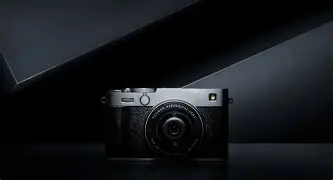
The Fujifilm X-E5 is designed for the "photographer’s photographer." It features a 26.1 or 40-megapixel sensor (depending on the specific configuration) that delivers breathtaking detail and the iconic Fujifilm Film Simulations. These simulations, like Provia, Velvia, and Classic Negative, allow users to achieve a "look" in-camera that usually requires hours of color grading in professional software. For many, this is the primary reason to choose Fujifilm: the output is beautiful the moment it hits the memory card.
The X-E5 emphasizes the tactile experience. With dedicated dials for shutter speed and exposure compensation, it encourages manual control. It uses the X-mount system, giving users access to some of the finest prime and zoom lenses in the industry. In a blind test of image clarity, the X-E5’s optics provide a level of micro-contrast and "pop" that a tiny action camera lens simply cannot replicate. It excels in portraiture, street photography, and landscape work where the nuances of light and shadow are paramount.
Find top-rated Cameras & Photography products at great prices.
Shop Amazon →Pros and Cons of the Fujifilm X-E5
- Pro: Superior Image Quality. The larger APS-C sensor provides better dynamic range, higher resolution, and significantly better low-light performance.
- Pro: Film Simulations. Fujifilm’s unique color science provides a professional aesthetic without the need for extensive editing.
- Pro: Compact Rangefinder Design. It is small enough to be a "carry everywhere" camera while still offering a high-end, professional feel.
- Con: Limited Stabilization. While it may have in-body image stabilization (IBIS), it cannot compete with the extreme stabilization needed for action sports.
- Con: Fixed Field of View. You are limited to what your specific lens sees; if a bird flies behind you, you missed the shot.
- Con: Fragility. While well-built, it is not an action camera; it is not waterproof without an expensive housing and shouldn't be dropped.
Side-by-Side Comparison: Technical Specifications
| Feature | Akaso 360 | Fujifilm X-E5 |
|---|---|---|
| Sensor Type | Dual 1/2.3" or 1/2" CMOS | APS-C X-Trans CMOS |
| Max Resolution | 5.7K (360 Sphere) | 26.1MP - 40MP (Stills) / 4K60 (Video) |
| Field of View | 360 Degrees (Infinite) | Variable (Lens Dependent) |
| Stabilization | Electronic (6-Axis Gyro) | In-Body (IBIS) + Optical |
| Low Light Performance | Average to Poor | Excellent |
| Primary Use Case | Action, Vlogging, VR | Street, Travel, Portraiture |
| Weight | Ultra Lightweight (Action form) | Lightweight (Mirrorless form) |
Buying Guide: Which Camera Matches Your Lifestyle?
Choosing between these two cameras requires an honest assessment of your daily habits and your creative goals. They are not competitors in the traditional sense, but they often compete for the same budget. Here is how to decide based on real-world scenarios.
Scenario A: The Solo Content Creator
If you are a YouTuber or TikToker who often films alone, the Akaso 360 is your "digital cameraman." You can set it on a tripod or a stick and walk around it, knowing that in post-production you can track your face perfectly. It removes the stress of framing. The Fujifilm X-E5, while capable of great video, requires more setup. You need to ensure you are in focus and within the frame, which can be difficult without a dedicated assistant or a very sophisticated flip-out screen setup.
Scenario B: The Travel Enthusiast
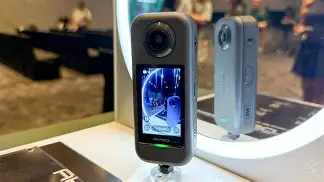
Travelers usually look for a balance between quality and weight. The Fujifilm X-E5 is the gold standard for "travel chic." It looks beautiful around your neck and produces images that look like they belong in a high-end magazine. However, if your travels involve kayaking, skiing, or scootering through chaotic city streets, the Akaso 360 is much more practical. It captures the feeling of the environment rather than just a specific slice of it.
Scenario C: The Professional Artist
For someone interested in the craft of photography—learning about depth of field, bokeh, and raw file manipulation—the Akaso 360 will eventually feel like a toy. It is a utility tool. The Fujifilm X-E5 is a creative instrument. The ability to swap lenses (a wide-angle for architecture, a fast prime for portraits) allows the camera to grow with your skills over several years.
Advanced Considerations: Audio and Workflow
One often overlooked aspect of the blind test is the audio quality and the speed of the workflow. The Akaso 360 typically features multiple microphones to capture spatial audio, which is vital for VR but can often sound "windy" or tinny compared to professional setups. The Fujifilm X-E5 offers more traditional input options, allowing for high-quality external microphones that result in a more cinematic soundscape.
Furthermore, consider the "Time to Share." With the Fujifilm X-E5, you can snap a photo, send it to your phone via Bluetooth, and post it to Instagram in seconds with the film simulation already applied. With the Akaso 360, you must first download a massive 360 file, use an app to "set keyframes" (tell the app where to look at what time), render that video, and then share it. This added friction means the Akaso is better for curated projects, whereas the Fujifilm is better for "in the moment" sharing.
Find top-rated Cameras & Photography products at great prices.
See Deals →Battery Life and Storage Concerns
Recording 360-degree video at 5.7K is an intensive task for any processor. The Akaso 360 tends to run hot and has a battery life that typically lingers around the 60-to-80-minute mark of continuous recording. You will need multiple batteries for a full day of shooting. The Fujifilm X-E5 is much more efficient, especially for still photography. A single battery can often last for 300 to 400 shots, making it a more reliable companion for long walks where charging isn't an option.
Data storage is another significant factor. A single 10-minute clip on the Akaso 360 can consume several gigabytes of space. If you are traveling for a week, you might find yourself needing a laptop and multiple external hard drives. The Fujifilm X-E5, while producing high-resolution files, is much more manageable, especially if you aren't shooting 4K video exclusively.
Conclusion
Determining which camera is "better" depends entirely on where you want the viewer's eye to go. If the goal is to disappear into the background and let the viewer explore an entire environment, the Akaso 360 is an unmatched piece of technology. It is a time machine that captures everything happening in a sphere around you, ensuring no memory is lost. It is the better choice for the adventurous, the active, and the innovators who want to push the boundaries of digital perspectives.
On the other hand, if the goal is to create a specific, artistic vision with intentionality, the Fujifilm X-E5 is the superior tool. It rewards the user for their knowledge of light and composition. It produces images with a depth, color, and soul that small-sensor action cameras cannot hope to achieve. For the storyteller who wants to guide the viewer’s eye and capture the world with cinematic elegance, the Fujifilm remains the definitive winner. In the end, the Akaso captures the where and the what, while the Fujifilm captures the how and the why.